


-

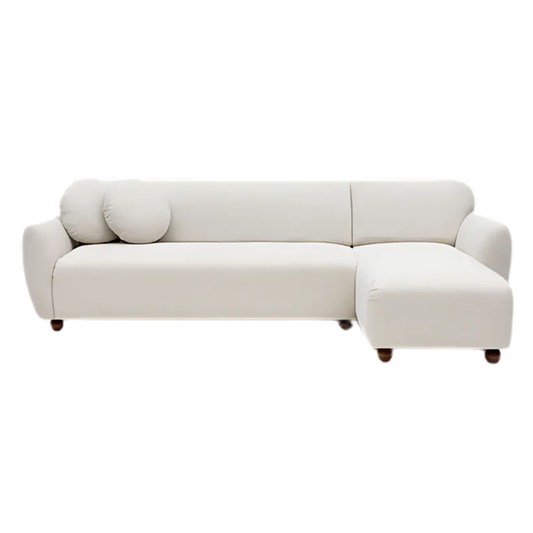
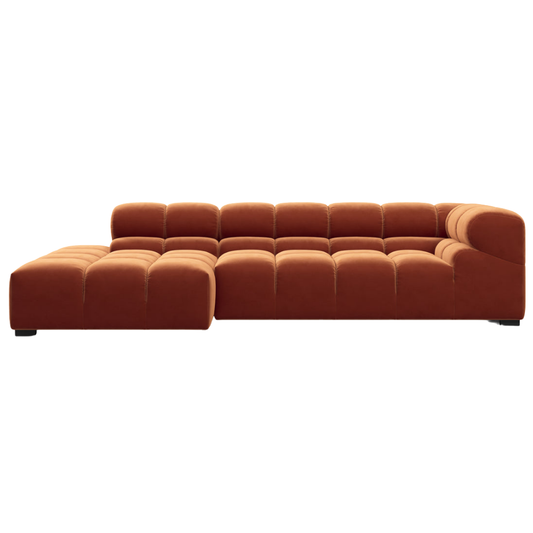
Large Corner Modular Sofa with Chaise 368 cm x 150 cm– 4 seats– Tully
Delivery in 14-16 weeks- €3.499,00
-

3-Seater Corner Modular Sofa with Corner Piece 286 x 150 cm - Tully
Delivery in 14-16 weeks- €2.999,00
-

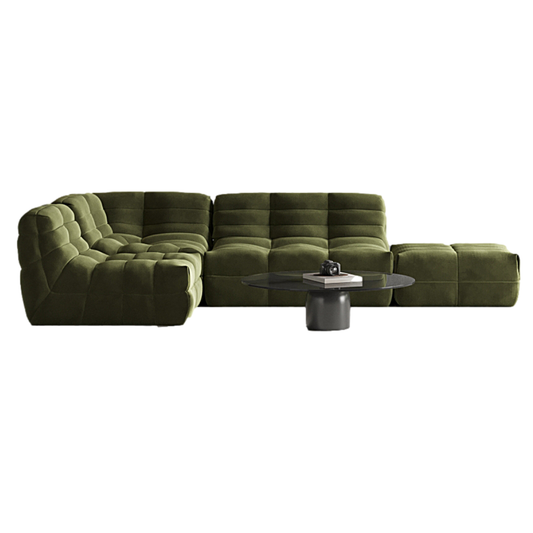
Large Panoramic Corner Modular Sofa with Footstool 388 cm x 320 cm - Tully
Delivery in 14-16 weeks- €5.499,00


Design Sofas: The Complete Guide to Choosing the Right Sofa
A sofa is the one piece that will anchor your living room for the next 10 to 15 years, so it's worth getting right. At Diiiz, the collection includes over 200 references: 2 and 3-seater straight sofas, corner sofas, modular and panoramic sofas, in fabrics, velvets, leathers and cashmeres chosen for their durability. This guide answers the questions most shoppers ask — size, shape, material, budget — before comparing our standout models.
Straight, Corner or Modular Sofa: How to Choose
The shape of your sofa depends first and foremost on the space available and how you'll actually use it (watching TV, hosting guests, napping, or occasionally sleeping on it).
| Sofa type | Best for | Seating capacity | Main advantage |
|---|---|---|---|
| 2-3 seater straight sofa | Small living rooms, studios, home offices | 2 to 4 | Compact footprint, sits flush against a wall |
| Corner sofa | Medium to large family living rooms | 4 to 6 | Makes the most of a room corner, sociable layout |
| Modular sofa | Large living rooms, open-plan spaces, evolving layouts | 4 to 8+ | Reconfigures to fit your needs (chaise longue, méridienne, removable footstool) |
| Panoramic / XXL sofa | Large homes, lofts, living rooms open onto the kitchen | 6 to 10 | Seats a crowd, works as a central "island" in the room |
A modular sofa like the Nuvolo collection differs from a fixed corner sofa in that it can be rearranged: the pieces (armrests, méridiennes, ottomans) can be moved around as your needs change or when you move house, making it a longer-lasting investment.
What Sofa Size Fits Your Room?
As a rule of thumb, allow around 60-65 cm of seat width per person for real everyday comfort (rather than the 50 cm often quoted, which is too tight for daily use). For a 15-20 sqm living room, a 3-seater or a small corner sofa (roughly 220-260 cm) stays well proportioned. Beyond 25 sqm, a more generous corner sofa or a panoramic model becomes a good fit without overwhelming the room.
For large homes, the Nuvolo Large corner sofa is a good illustration of this generous format: built to fill a spacious room without losing visual coherence, it particularly suits big families or anyone who entertains often. In an even more imposing register, the large panoramic corner modular sofa with footstool, 388 cm x 320 cm, from the Tully collection takes the modular concept to its fullest: its dimensions and built-in footstool make it a true centrepiece for a loft or a large open living space.
Modular Sofas: Building a Sofa That's Truly Yours
A modular sofa lets you combine seats, corner units, chaises and ottomans like puzzle pieces. It's the most flexible option for:
- adapting the sofa to an unusual room (attic space, angled corner, open-plan layout);
- reshaping the layout after a move or a change in family life;
- separating modules temporarily to seat more guests.
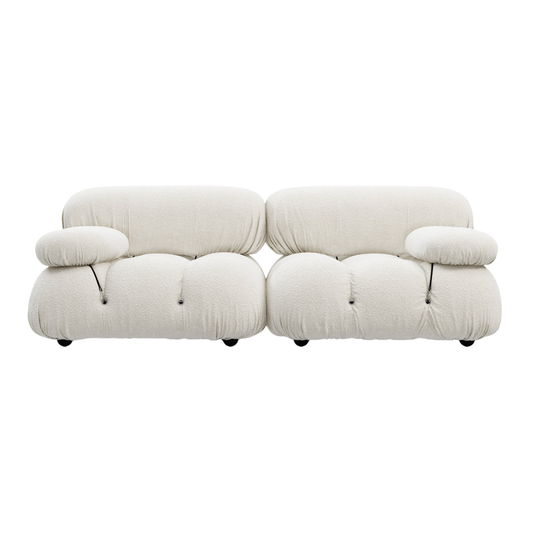
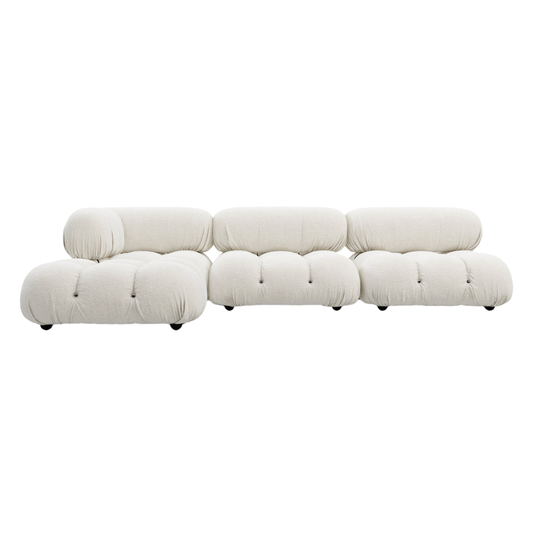
The Camelia collection sits within the tradition of low, deep modular sofas popularised by 1970s Italian design, with a generous seat built for sitting as comfortably as lounging. The Camelia 3-seater modular straight sofa with footrest is a good example: each module (seat, backrest, armrest, footrest) can be rearranged independently, so the sofa evolves with you over the years instead of being replaced.
Distinctive Shapes: Curved and Tufted Sofas
Beyond straight lines, two trends dominate contemporary sofa design:
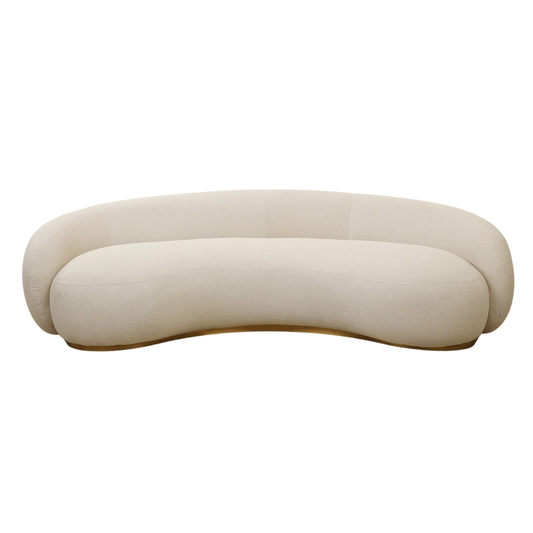
The organic curved sofa. Inspired by 1960s-70s Italian design, it softens a room's hard angles and creates a sculptural focal point. The Augusto luxury sofa (210 cm) is a great example: its rounded silhouette works just as well as a statement piece on its own or paired with an armchair from the same line.
The tufted sofa. Tufting (buttons or stitching that create a quilted pattern) adds a classic, refined touch and extra cushioning at the backrest. The Cady tufted 3-seater sofa pairs this traditional detailing with a more contemporary silhouette, for a sofa that's as comfortable day to day as it is visually striking.
Which Material Should You Choose?
| Material | Advantages | Things to consider | Care |
|---|---|---|---|
| Fabric (chenille, boucle, velvet) | Soft, wide choice of colours, great value for money | More prone to staining depending on the fabric | Removable, washable covers on some models |
| Velvet | Luxurious look, extremely soft to the touch | Can show light marking with use (a natural trait of velvet) | Regular brushing, dry cleaning recommended |
| Leather | Hard-wearing, develops a patina over time, easy to wipe down | Higher entry price, sensitive to direct UV exposure | Soft cloth, conditioning product 1-2 times a year |
| Cashmere / wool | Premium feel, good thermal insulation | More delicate care required | Professional cleaning recommended |
At Diiiz, most sofas come with free fabric, leather or cashmere swatches, sent out before purchase so you can check the colour and feel in your own home.
Frequently Asked Questions About Choosing a Sofa
How long does a good-quality design sofa last?
A well-built sofa (solid wood or plywood frame, high-density foam, abrasion-resistant fabric) typically lasts 10 to 15 years with everyday use, compared with 5 to 7 years for an entry-level sofa.
Fabric sofa or leather sofa: which is better?
Fabric offers a wider choice of colours and textures and works well for households with kids or pets thanks to removable covers. Leather stands out for its longevity and the patina it develops over time, but comes with a higher entry price and specific care needs.
Can a corner sofa be placed in the middle of a room?
Yes, provided the room is large enough: panoramic and XXL modular sofas are, in fact, often designed to work as a central "island" in a large living room rather than being pushed against a wall.
How do you clean a velvet sofa at home?
Regular brushing in the direction of the pile is enough for everyday upkeep. For stains, test any cleaning product on a hidden area first and avoid excess water, which can leave watermarks on velvet.
How long does it take to receive a made-to-order sofa?
Modular and made-to-order sofas are generally produced once ordered, with lead times most often ranging from 2 to 4 months depending on the model and fabric chosen — worth planning ahead for if you're moving in on a specific date.
In Short
Whether you're after a compact sofa for a studio, a large family corner sofa or a panoramic modular sofa for a loft, the right choice comes down to three things: the space you actually have, how you'll use it day to day (relaxing, entertaining, napping), and a material that fits your lifestyle. Browse the Diiiz collection to compare formats, order your fabric swatches, and build the sofa that's right for you.

- Choosing a selection results in a full page refresh.