




Bar Stools & Benches: The Complete Buying Guide
Bar stools have outgrown their purely functional role. Today they're a genuine style statement — able to turn a kitchen island, a breakfast counter, or a restaurant bar into a warm, design-led space. Whether you're furnishing a home kitchen, a café, or a hotel lobby, four things matter most when choosing bar seating: seat height, material, style, and whether the piece needs to handle everyday domestic use or heavy commercial traffic.
Counter Stool or Bar Stool? Getting the Seat Height Right
This is the single most common mistake when buying bar seating online: ordering a stool that's the wrong height for the counter or island it's meant to sit at. In English-language furniture terms, there's a real distinction between a counter stool and a bar stool — they're not interchangeable:
| Surface type | Surface height | Recommended seat height | Stool type |
|---|---|---|---|
| Low table / desk | 60–65 cm (23–26 in) | 45–50 cm (18–20 in) | Low stool |
| Standard kitchen island / counter | 90 cm (35 in) | 60–65 cm (24–26 in) | Counter stool |
| Bar-height counter / high table | 105–115 cm (41–45 in) | 75–80 cm (29–31 in) | Bar stool |
As a rule of thumb, leave 25–30 cm (10–12 in) of legroom between the seat and the underside of the counter or table. For a standard 90 cm kitchen island, a counter-height model like the Bettie wire counter stool, 60 cm seat height, is built exactly for that — a welded chrome wire frame with a leather cushion, in a style that nods to mid-century wire-mesh design. For something more flexible — a low side seat, extra footrest, or decorative accent that doesn't need a counter at all — the Spidy stainless steel low stool, available in three sizes, works just as well next to a sofa as it does in an entryway.
Which Material Should You Choose: Wood, Rattan, Metal, or Upholstered?
Material drives both the look and the upkeep of a bar stool. Here's how the main categories compare:
| Material | Best for | Maintenance | Strengths |
|---|---|---|---|
| Solid wood / walnut | Classic, timeless, high-end interiors | Wipe with a slightly damp cloth; avoid excess moisture | Durability, natural grain, timeless resale value |
| Rattan / cane | Scandinavian, boho, japandi | Regular dusting; keep away from prolonged humidity | Lightweight look, breathable, natural texture |
| Metal / stainless steel / wire | Industrial, minimalist, contemporary | Dry or lightly damp cloth; low upkeep | Load capacity, longevity, suited to heavy use |
| Upholstered (velvet, boucle, fabric) | Cosy, comfort-first, hospitality dining | Dry clean or removable cover, depending on the model | Superior seating comfort, back support |
- Solid wood and walnut bring warmth and permanence to a space. The Chesnut bar stool — a walnut-finish stool with a tapered moulded-plywood shell — is a favourite among HORECA professionals and interior designers for high-end bars and restaurants, and doubles as a matching chair for a coordinated dining set.
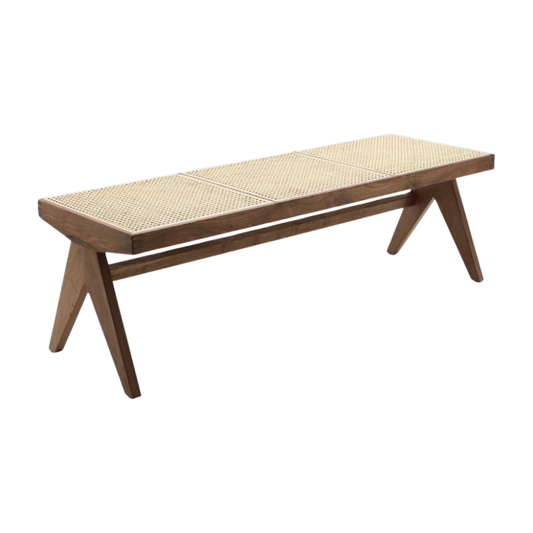
- Rattan and cane suit Scandinavian, boho, and japandi interiors. Light and airy, they pair naturally with warm, natural tones — and the same logic applies to benches, as with the Library bench in hand-woven cane, inspired by Pierre Jeanneret's Chandigarh furniture, with a solid cherry-wood frame for long-term stability.
- Metal, stainless steel, and welded wire suit industrial or minimalist spaces, as seen in the Bettie and Spidy stools above — both built for frequent use with minimal upkeep.
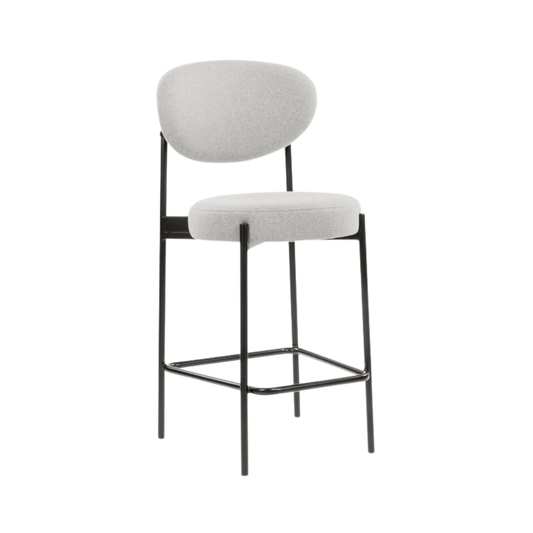
- Upholstered seats in velvet, boucle, or fabric put comfort first: a wide, cushioned seat and a supportive backrest matter when guests linger. The Pandora upholstered counter stool, 65 cm, on a sleek black metal base, is available in a wide range of velvet, boucle wool, and fabric finishes for exactly that kind of counter where people sit and stay a while.
Which Style Fits Which Interior?
Beyond material, style sets the overall mood of a room. Four looks come up again and again in current interior design:
- Industrial style: exposed metal frames, chrome or brushed stainless steel finishes, clean geometric lines. The Spidy low stool and the Bettie wire stool both sit firmly in this category, somewhere between an urban loft and a design atelier.
- Scandinavian / boho style: natural materials, hand-weaving, light and organic tones. Cane and rattan dominate here, as with the Library bench, for a calm, light-filled feel.
- Classic, high-end style: fine wood, refined finishes, timeless silhouettes — the Chesnut bar stool is the clearest example, ideal for a kitchen that opens onto a more traditional dining room.
- Contemporary comfort style: upholstered seats, velvet or textured fabric, curved backrests — the Pandora counter stool shows that design and comfort don't have to be a trade-off.
Bar Stool vs. Bar Chair: What's the Difference?
A bar stool is typically backless and armless — compact, easy to tuck under a counter, and a real space-saver in smaller kitchens. A bar chair (or upholstered bar chair) adds a backrest — and sometimes armrests — for better support over longer sitting periods, like a full meal. The right choice comes down to how the seat will actually be used: a stool suits a kitchen island where people perch briefly for coffee, while an upholstered chair like the Pandora is the better fit for a proper counter-height dining setup where guests stay seated.
Designer Benches: Where Comfort Meets Versatility
Versatile and timeless, the design bench keeps getting reinvented. Far from its traditional role, it now works in nearly every room — and outdoors too.
In an entryway, it's a practical spot to sit while putting on shoes. In a living room, it adds extra seating without the bulk of another armchair. At the foot of a bed, it's an elegant place to lay out clothes or a throw. Outdoors, it becomes part of a relaxed garden or terrace setup.
Natural materials — like the hand-woven cane on the Library bench — work equally well in a Scandinavian interior or a boho-chic one, while staying understated enough for commercial use in a hotel lobby, restaurant, or boutique entrance.
Pouffes and Low Stools: Small Footprint, Big Character
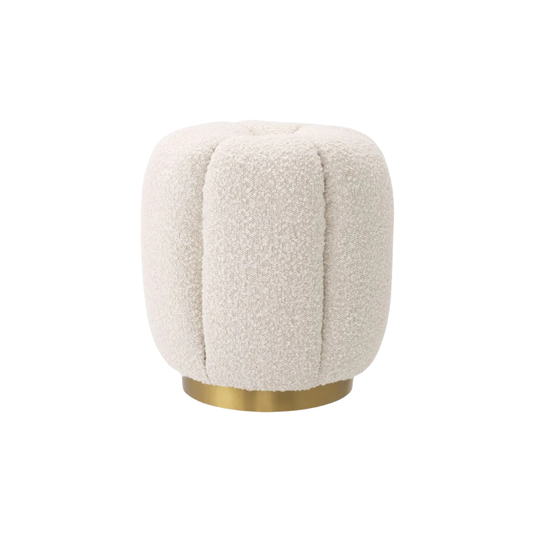
Small in scale but big on impact, pouffes and low stools add lightness and versatility to a room. Easy to move, they work as an extra seat in the living room, a footrest, or a purely decorative accent in a bedroom or lounge area. The Spidy low stool, available in three sizes (S, M, L), makes the point well: just as comfortable as a spare seat as it is as a plinth for a plant, a tray, or a stack of books.
Styling Tips: Pairing Stools and Benches With Your Interior
- Play with contrast in materials: a stone or light-wood countertop paired with metal stools creates a controlled industrial contrast, while a dark countertop pairs better with rattan or light wood for visual balance.
- Keep repetition intentional: for a kitchen island, 3–4 matching stools read cleaner than mismatched ones. Benches work the opposite way — pairing a bench with slightly different dining chairs is what gives a table character.
- Let one piece lead: in an otherwise minimal, contemporary interior, a single strong piece — a sculptural cane bench or an iconic wire stool — is often enough to create a focal point without overcomplicating the room.
Build Quality and Durability
A bar stool sees more daily wear than almost any other seat in the house — constant sitting, moving, and, in commercial settings, heavy rotation. Build quality is what determines whether it lasts. Diiiz's direct factory access means custom production, competitive pricing, and a 2-year warranty on all furniture bought online. For frequent or professional use — cafés, restaurants, coworking spaces — welded steel or stainless-steel structures like the Spidy or Bettie stools are particularly well suited, alongside solid-wood options like the Chesnut for a warmer, more traditional finish.
Frequently Asked Questions About Bar Stools and Benches
How many bar stools do I need for a kitchen island?
Plan on roughly 60–70 cm (24–28 in) of width per person seated. A standard 2-metre island typically fits 3 stools comfortably; for anything longer, 4 stools keep enough space between seats so elbows don't collide.
Are bar stools height-adjustable?
Some models — mainly gas-lift stools on a central pedestal — offer adjustable height. Most fixed-frame designer stools, including the ones featured here, are instead offered in multiple seat heights so you can match your counter precisely at the point of purchase.
What's the best bar stool for commercial or hospitality use?
For heavy daily use, prioritise durable, low-maintenance materials: metal, stainless steel, or treated solid wood. The Bettie wire stool and the Spidy stainless steel low stool are particularly well suited to cafés, bars, and restaurants thanks to their sturdy build and minimal upkeep.
How do I pair a bench with a dining table?
A bench pairs naturally with mismatched dining chairs to break up the symmetry of a dining room, or opposite a banquette for a cosier layout. Just make sure the seat height matches the table, exactly as you would with a stool.
What's the difference between a low stool and a pouffe?
A low stool has a rigid structure — wood or metal — with a fixed seat, while a pouffe uses soft, cushioned materials like fabric, boucle, or velvet. A low stool offers more stability and can double as an occasional side table; a pouffe prioritises comfort and a lighter visual footprint.
Can bar stools work without a kitchen island?
Yes — paired with a narrow console table or a simple wall-mounted shelf, bar stools create a quick, casual seating spot even in small apartments. Low stools like Spidy also work well as standalone accent seating with no counter involved at all.
How do I clean wood or rattan bar stools?
For wood, a slightly damp cloth is enough — avoid abrasive cleaners that can dull the finish. For rattan and cane, regular dusting with a soft brush is recommended, and prolonged exposure to humidity should be avoided, as it can weaken the weave over time.
What's a realistic budget for designer bar stools?
Designer bar stools typically range from around €130 to €300 depending on material and finish: entry-level wood or rattan models start around €130–150, while worked metal or upholstered pieces of good quality tend to sit between €180 and €250.
Diiiz can help you find the bar stool or bench that best fits your interior, your style, and your budget — from the Wishbone chair and Bella chair to the Lix bar stool, and more distinctive pieces like the Chesnut walnut bar stool, the Bettie wire counter stool, or the Library cane bench.

- Choosing a selection results in a full page refresh.