


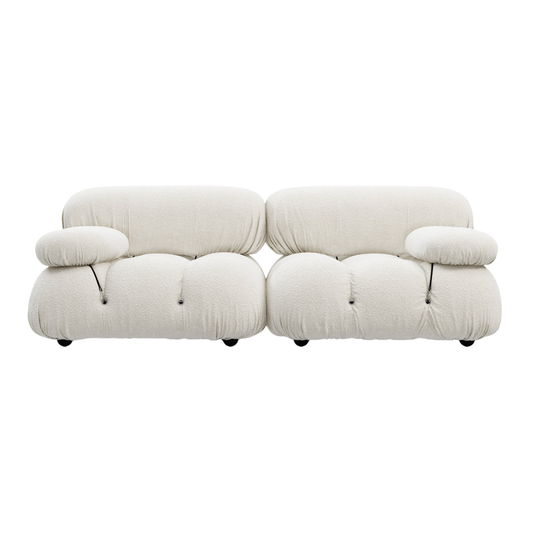
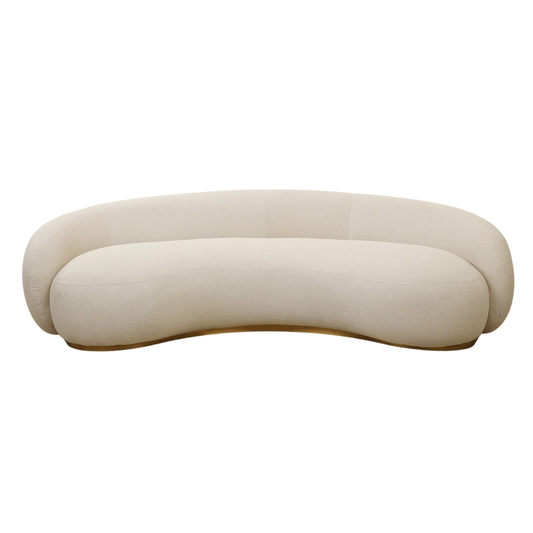
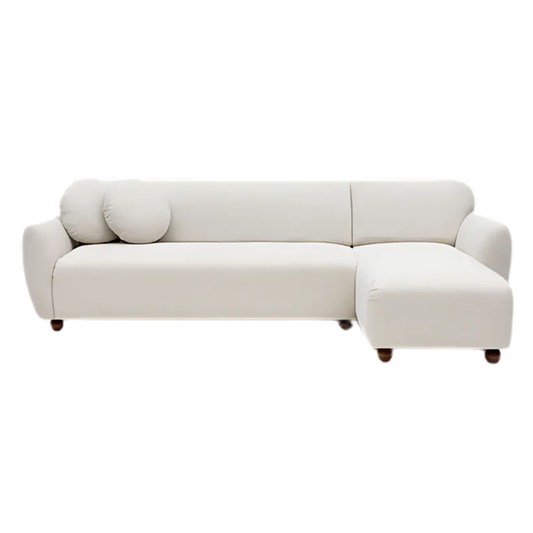
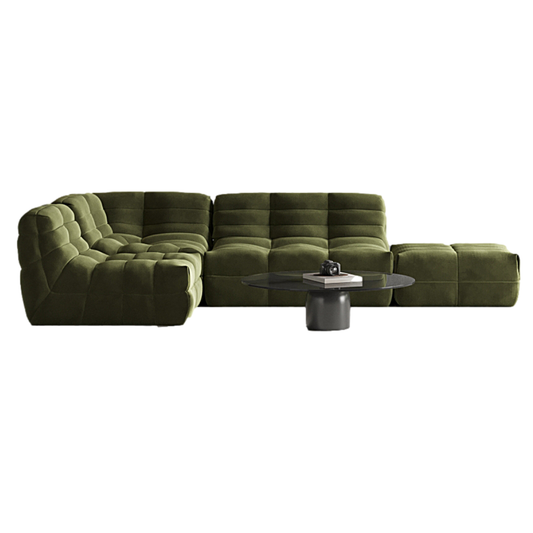
-

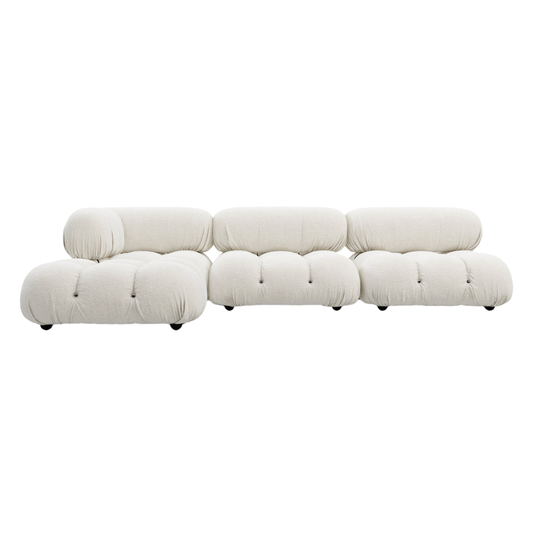
Large Panoramic Corner Modular Sofa with Footstool 388 cm x 320 cm - Tully
Delivery in 14-16 weeks- €5.499,00
-

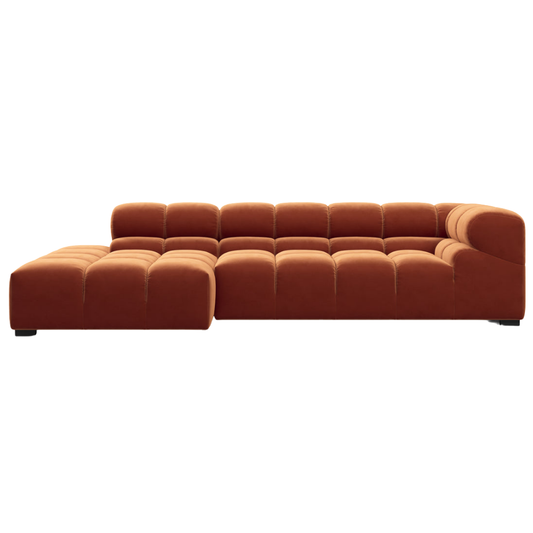
Bubble – Orange Velvet L Shape Corner Sofa | Designer Sectional for Living Room
Delivery in 3 weeks- €2.520,00
-

Petra – White L Shape Corner Sofa | Designer Sectional for Living Room
Delivery in 3 weeks- €1.199,00
-

Como – Anthracite L Shape Corner Sofa | Designer Sectional for Living Room
Delivery in 3 weeks- €2.899,00
-

Sofia – Dark Blue L Shape Corner Sofa | Designer Sectional for Living Room
Delivery in 3 weeks- €949,00
-

Bubble – Grey Velvet L Shape Corner Sofa | Designer Sectional for Living Room
Delivery in 3 weeks- €2.519,00
-

Bubble – White Curly Wool L Shape Corner Sofa | Designer Sectional for Living Room
Delivery in 3 weeks- €2.520,00


A corner sofa is more than just a seat — it's the piece that shapes an entire living room. With its L-shaped, U-shaped, curved or modular design, it makes clever use of a room's corners, space that a straight sofa usually leaves empty, to deliver maximum seating without ever feeling bulky. It's the piece the whole family gathers on during the week and the one friends end up sitting around at every get-together. At Diiiz, every designer corner sofa is built around three priorities: lasting comfort, timeless style, and careful craftsmanship backed by a 24-month warranty. Whether you're after a corner sofa bed for overnight guests, a modular, panoramic sofa for an open-plan living room, or a compact L-shaped sofa for a city apartment, this guide answers the questions most shoppers ask before buying: what size to choose, which upholstery suits your lifestyle, how to think about the orientation, what budget to plan for, and how to match the sofa to the rest of your decor. A corner sofa differs from a straight sofa by an extra section — usually called a chaise or corner module — set at a right angle to the main seat. This L-shaped layout (or U-shaped for the largest models) fits more people into a footprint close to that of a regular 3-seater sofa. That space efficiency is exactly why corner sofas have become the default choice in contemporary living rooms, whether the room is large and open or narrower and more traditional. Beyond the space it saves, a corner sofa also opens up more ways to use the room: stretch out for a movie night, gather a group for conversation, or use it as a soft divider between the living and dining areas in an open-plan space. It's a genuinely versatile piece of furniture — as long as you get the size, orientation and upholstery right. Corner sofas generally fall into a few broad families, each suited to a different room and a different way of living: A corner sofa's orientation is worked out by standing in front of it: if the long chaise section sits on your left, it's a left-hand corner sofa; if it sits on your right, it's a right-hand one. This choice matters more than it seems — it depends on where your windows are, where the TV or fireplace sits, and how you naturally move through the room. Before buying, it's worth marking out the sofa's exact footprint on the floor with tape or newspaper, to make sure the orientation you're considering won't block a walkway or cut off natural light. The choice between a corner sofa and a straight sofa mostly comes down to the space available, how many people live in the home, and how the living room is used day to day. In practice, a corner sofa often takes up roughly the same floor space as a 3-seater sofa, while offering more seats by making use of a corner that would otherwise go unused. If your living room is smaller, or you're after an easy-to-place secondary seat, a 2-seater sofa or a 3-seater sofa will usually be a better fit and easier to position in a tighter space. Corner sofa dimensions vary a lot depending on the model and the number of modules. Here are some general benchmarks to help you visualise the space you'll need: These figures are only a starting point: how big a sofa feels also depends on ceiling height, how much other bulky furniture is in the room, and how much clearance you need around the seating. As a rule of thumb, leave 60–80 cm of walking space between the sofa and a coffee table or TV unit. The upholstery shapes how the sofa feels day to day, how easy it is to maintain, and the overall mood of the room. Here's a comparison of the main options: If nothing beats the feeling of something soft and plush, velvet or boucle wool will give your living room a cosy, welcoming feel. If you want something chic and genuinely low-maintenance — especially with kids or pets around — leather or faux leather is the more practical choice. The colour and material of the sofa should always work with the rest of your decor to create a cohesive look: Corner sofa prices vary considerably depending on size, number of modules, upholstery and level of customisation: Investing in a designer corner sofa is a smart style decision — a touch of splendour paired with maximum comfort, for the most dramatic transformation your living room can get. That said, real comfort shouldn't cost more than a well-designed piece for your home: Diiiz's range spans from accessible entry-level models to the most generous modular sets, so there's a fit for every budget. Once you've chosen your corner sofa, a few finishing touches will help you get the most out of your lounge corner: Maintenance depends directly on the upholstery you choose. As a general rule, regular vacuuming with a brush attachment is enough to remove dust and pet hair. For fabric and velvet, spot-clean stains as soon as they appear with a product suited to the material, avoiding heavy rubbing that can damage the fibres. Removable, washable covers, where available, make long-term upkeep much easier. Leather should be wiped with a soft, slightly damp cloth and conditioned once or twice a year to keep it supple and prevent cracking over time. Diiiz offers professional delivery for its corner sofas across the European Union. Lead times vary by model and finish: some in-stock pieces can be delivered within a few weeks, while more customised configurations or larger modular sets need more production time. Every Diiiz corner sofa also comes with a 24-month warranty, a mark of the build quality and durability of the materials used. For a small living room, go for a compact 2- to 3-seater corner sofa with a shorter chaise, or choose a modular sofa and only use part of the modules to start with. A 2-seater sofa can also be a better fit if space is genuinely tight. Orientation is worked out by standing in front of the sofa: if the chaise (the long section) is on your left, it's a left-hand corner sofa; if it's on your right, it's right-hand. The choice depends on your room's layout, where the windows and TV are, and how you want to move through the space. Not necessarily. A corner sofa often has a footprint similar to a 3-seater sofa, but spreads the seating across two sides instead of one straight line, which usually frees up more walking space in the middle of the room. Regular vacuuming with a brush attachment covers everyday upkeep. For stains, spot-clean with a product suited to the fabric type; removable, washable covers, where available, are worth checking for before you buy. Yes — that's one of the main advantages of modular collections like Camelia, Nuvolo or Tully: the modules can be rearranged into a straight sofa, a corner shape, a U-shape, or even split into separate pieces as your room or your needs change. Lead times vary by model and finish, typically ranging from a few weeks to several months for the most customised configurations. Diiiz provides professional delivery across all EU countries. A classic corner sofa has a fixed shape (L-shaped, curved or standard). A modular sofa, like the Camelia, Nuvolo or Tully collections at Diiiz, is made up of independent modules that can be combined, separated or rearranged freely: chaises, poufs, armrests and footrests come together to form a corner layout, a U-shape, or even a panoramic configuration, depending on the space available. Diiiz offers a wide selection of affordable, designer corner sofas, from sleek and on-trend pieces to classic modular sets. We have a wealth of options, from chic and trend-led to timeless modular pieces, creating a real sense of softness and visual interest in your living room. Every sofa is carefully made, even in configurations built for just one or two people, and every corner sofa comes with a 24-month warranty. Real comfort shouldn't cost more than a beautifully considered piece for your home — explore the full collection now and find the corner sofa that will transform your living room.Corner sofas: the complete buying guide
What is a corner sofa, and why choose one?
What are the different types of corner sofas?
Left, right or chaise-first: how do you choose the orientation?
Corner sofa, 2-seater or 3-seater: which one is right for you?
Sofa type
Seating capacity
Floor footprint
Best suited for
2-seater sofa
2 people
Compact
Small living rooms, bedrooms, home offices, or a second seat in a larger room
3-seater sofa
3 people
Medium
Mid-sized living rooms, timeless look, all-round versatility
Standard or L-shaped corner sofa
4 to 5 people
Similar to a 3-seater, but better distributed
Family living rooms, TV corners, frequent guests
Panoramic / U-shaped corner sofa
5 to 8 people or more
Large
Very large living rooms, bigger families, home cinema, open-plan living spaces
What size corner sofa is right for your living room?
Configuration
Approximate total length
Recommended room size
Compact corner sofa (3-seater)
200–240 cm
From 15 m² / 160 sq ft
Standard corner sofa (4–5 seats)
250–300 cm
From 20 m² / 215 sq ft
Large modular corner sofa (5+ seats)
300–390 cm
From 25–30 m² / 270–320 sq ft
Panoramic / U-shaped corner sofa
380 cm and above
From 30–35 m² / 320–375 sq ft, ideally an open-plan room
Which upholstery should you choose for a corner sofa?
Upholstery
Feel
Maintenance
Mood
Structured / mélange fabric
Soft, breathable
Regular vacuuming, spot-clean stains
Warm, timeless
Velvet
Very soft, slight sheen
Soft brush, avoid excess moisture
Elegant, cosy
Boucle wool
Textured, plush
Vacuum, gentle spot-cleaning
Nordic, natural
Leather
Firm at first, softens with wear
Soft cloth, occasional conditioning
Chic, statement
Faux leather / silicone leather
Smooth, consistent
Damp cloth, very low-maintenance
Modern, contemporary
Matching your corner sofa to your living room style
What budget should you plan for a corner sofa?
Styling ideas around your corner sofa
How do you care for a corner sofa day to day?
Delivery and warranty: what to expect
Frequently asked questions about corner sofas
What size corner sofa works best in a small living room?
Corner sofa: left-hand or right-hand — how do you choose?
Does a corner sofa take up more space than a straight sofa?
How do you clean a fabric or velvet corner sofa?
Can a modular corner sofa be turned back into a straight sofa?
How long does delivery take for a made-to-order corner sofa?
What's the difference between a corner sofa and a modular sofa?
Shop corner sofas online at Diiiz

- Choosing a selection results in a full page refresh.